
Arbeloa and Carrick could face more pressure during extended international break
September 20, 2026 07:50
WHAT HAPPENED
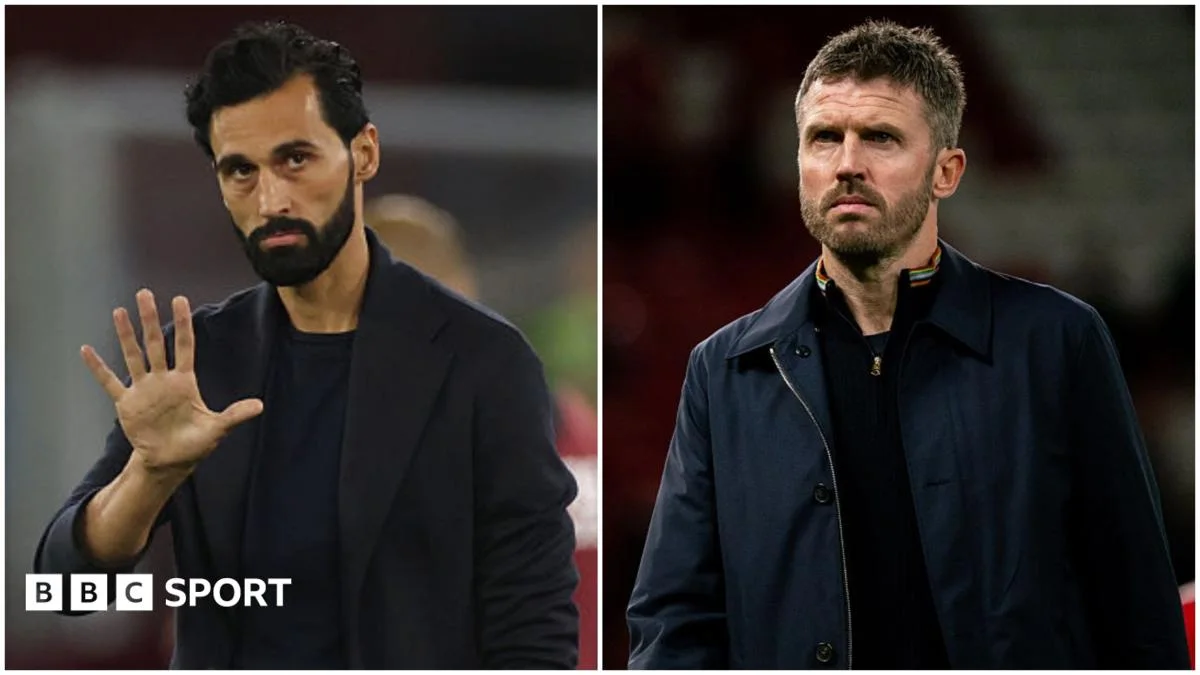
Arbeloa, appointed in the summer after overseeing 28 games as Real Madrid boss in the second half of last season, has no wins and three defeats in his first four Premier League matches. Reports of unrest tied to players’ social media activity have also surfaced. Carrick’s situation was compounded by United’s 3-2 EFL Cup loss to Brighton — the first time the club had led at home by two goals and lost since a 3-2 defeat by Tottenham in 1976 — following a 1-0 Premier League defeat to 10-man Manchester City. United’s only victories this season have been against Ipswich Town and Sabah.
KEY CONTEXT
The current international break is longer than recent years, three weeks rather than the usual two, and arrives later in the calendar than the traditional September slot when clubs had played only three league fixtures. Historical patterns across the past decade suggest clubs rarely make managerial changes during the early international breaks: only two managers left during the September break in the last ten years (Javi Gracia in 2019 and Nuno Espírito Santo last year), and only two during the October stoppage (Francesco Guidolin in 2016 and Xisco Muñoz in 2021). By contrast, November has seen six managerial changes in the past ten years, and nine coaches had left their posts by the time the second international break occurred in those campaigns.
WHY IT MATTERS
Former Stoke, West Brom and Middlesbrough boss Tony Pulis notes that international breaks are natural points for clubs to act because they give time for a new manager to settle, assess staff and prepare for a first game in charge. As he put it: “those international breaks...definitely heighten the chances of struggling managers getting the sack.”
WHAT HAPPENS NEXT
Fulham and Manchester United meet at Craven Cottage on Sunday, the final fixture before players travel to represent their countries during the three-week pause.