
Eligibility rules 'not particularly fair' - O'Neill
September 15, 2026 16:30
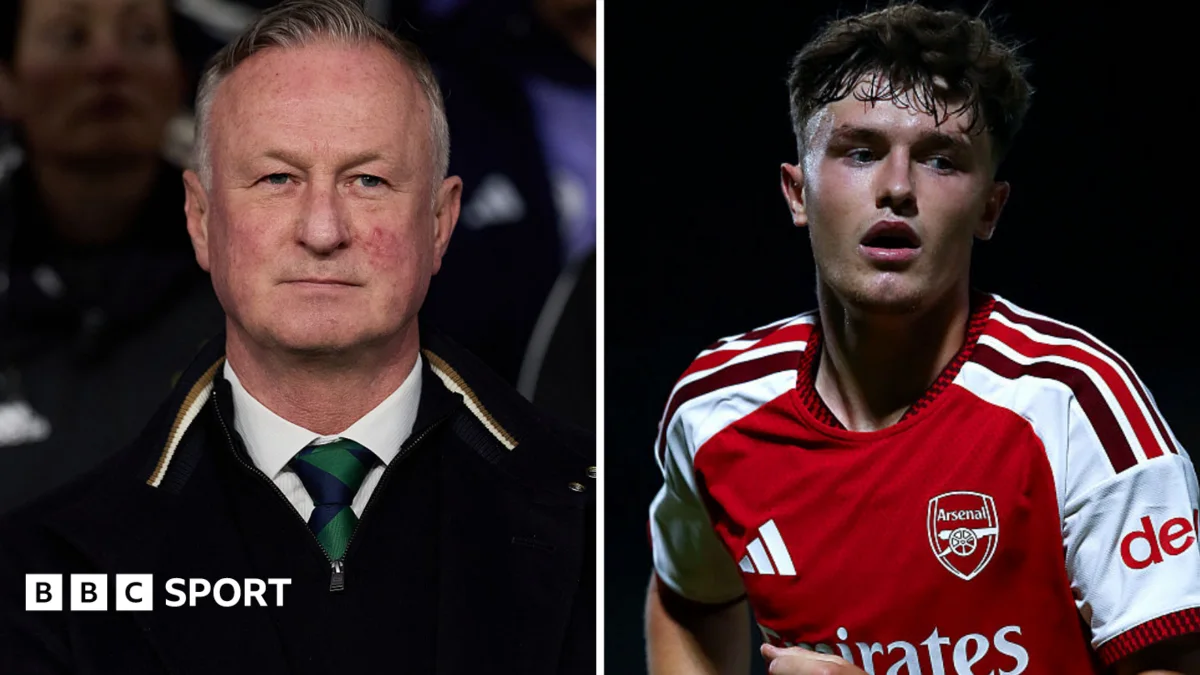
Northern Ireland manager Michael O'Neill has criticised the current international eligibility framework for forcing teenagers into early, often irreversible decisions after Arsenal youngster Ceadach O'Neill was included in Northern Ireland's squad for an upcoming Nations League quadruple-header. The 17/18-year-old (age not specified in the source) has already won two senior caps for Northern Ireland but has also been approached by the Republic of Ireland.
Under existing Fifa rules, a player born in Northern Ireland who wishes to represent the Republic must make a one-time application to change international allegiance. Making further competitive appearances for Northern Ireland would impose additional restrictions on such a switch.
KEY CONTEXT
- The Good Friday Agreement allows people born in Northern Ireland to hold both British and Irish passports.
- A 2010 Court of Arbitration for Sport ruling permits anyone born on the island of Ireland to play for the Republic of Ireland regardless of the usual birthplace, parentage or residency criteria. That interpretation creates a unique overlap between Northern Ireland and the Football Association of Ireland (FAI).
- Fifa regulations permit only a single transfer of international allegiance. Appearing for Northern Ireland in the forthcoming Nations League fixtures would mean Ceadach O'Neill would have to wait until he is 21 to seek a switch; accumulating four senior caps would make any future transfer impossible.
WHY IT MATTERS
The rules place young players under considerable pressure to decide which country to represent at a very early stage of their careers, according to Michael O'Neill, who says that forcing such a choice before a player has established him- or herself as a professional is unfair and a duty-of-care concern for national associations. The situation impacts player development pathways and the ability of associations to retain talents who have been in their systems from a young age.
Past moves illustrate the issue's footballing consequences: during Michael O'Neill's tenure two players (Jamie Donley and Ronan Hale) completed international transfers to Northern Ireland, while more prominent switches in earlier years — notably James McClean and Shane Duffy — saw players who left Northern Ireland go on to extended Republic of Ireland careers. The FAI has also argued it should at least be proactively contacting eligible players.
WHAT TO WATCH NEXT
- Whether Ceadach O'Neill plays in any of the Nations League quadruple-header fixtures; an appearance would delay any possible transfer until age 21, and reaching four caps would bar a future switch altogether.
- How both associations handle approaches to other young players eligible for either nation, given the FAI's stated intent to identify and engage eligible talent.
- Any formal moves by the player to submit a Fifa transfer of international allegiance, or public responses from the FAI or Irish FA on the case.
KEY FACTS
- Ceadach O'Neill has two senior caps for Northern Ireland and was named in the Nations League squad.
- Fifa permits only a one-time international transfer of allegiance.
- If the player appears in the Nations League ties he must wait until he is 21 to change allegiance; four senior caps would prevent any transfer.
- The Good Friday Agreement allows people born in Northern Ireland to hold British and Irish passports.
- A 2010 Court of Arbitration for Sport ruling lets anyone born on the island of Ireland represent the Republic, creating a unique eligibility overlap between the two associations.
- FAI director of football John Martin has said the FAI should be at least contacting eligible players.