
'Let's go, let's go' - inside catastrophic derby VAR mistake
September 16, 2026 17:40
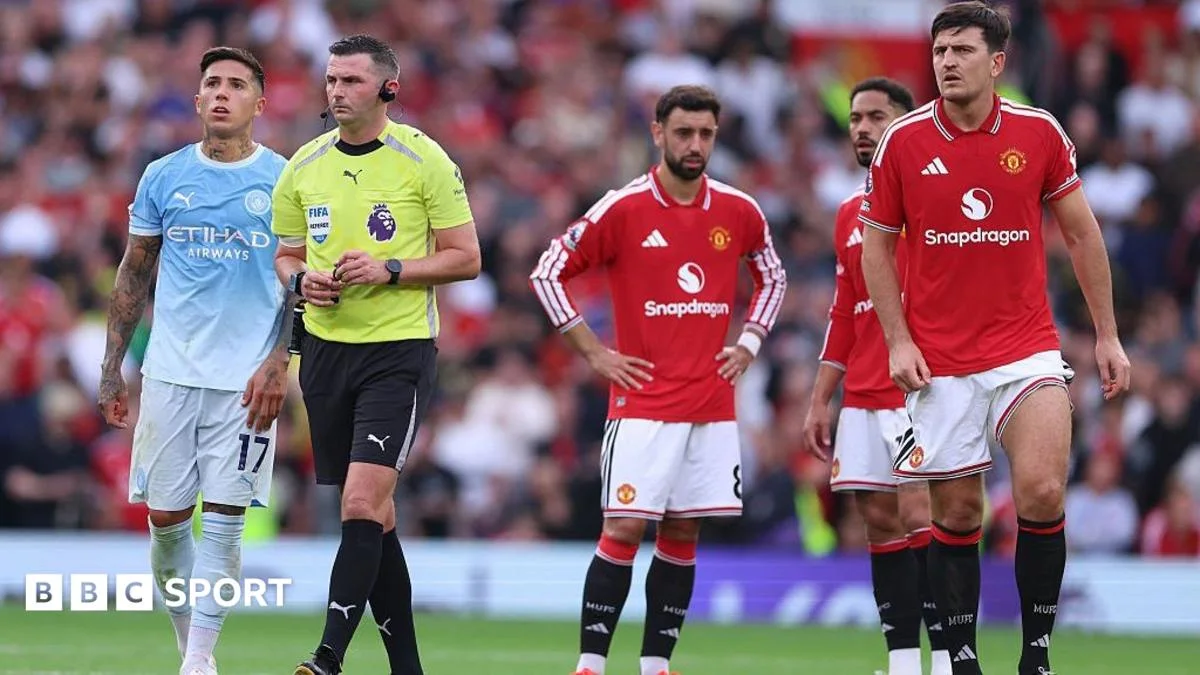
Video assistant referee Matt Donohue and his assistant Blake Antrobus failed to recognise that Enzo Fernández was three yards offside before attempting to head the ball, during the VAR review that confirmed Erling Haaland's winning goal in the Manchester derby. Audio from the review captured Donohue urging speed — "Quick, quick, quick, quick! Go, go, go, go, go!" — as the team moved rapidly through the footage.
The VAR pair halted the first replay when Josko Gvardiol played the cross and then switched straight to semi-automated offside technology focused on the attacking phase. By not reviewing the full sequence from the cross through to Haaland’s header, they missed Fernández’s position and potential impact, and concluded the review by concentrating on whether Fernández made contact with the ball.
KEY CONTEXT
The Premier League introduced a season principle calling for "a more efficient application of VAR to reduce delays," and stakeholders including managers, coaches and supporters have repeatedly flagged decision speed as a priority. Referees' chief Howard Webb has acknowledged the demand for quicker reviews, and league figures show average VAR delays have fallen from 46 seconds to 36 seconds season-on-season.
However, the BBC notes that a push for speed carries risks: another recent VAR error — the failure to award Arsenal a penalty at Aston Villa — has also been linked to reviews cleared too quickly. The Derby incident was described in the source as a panicked, rushed exchange between the VAR and the replay operator, rather than the calm, methodical process officials aim for.
WHY IT MATTERS
The episode highlights the tension between faster VAR interventions and the need to follow a complete, methodical review process. By stopping the footage at the wrong moment and moving immediately to offside technology, the VAR team missed contextual evidence that would have influenced the ruling. That lapse turned what should have been a comprehensive assessment of all phases of play into a narrow examination that overlooked a clear offside position.
The mistake affected a high-profile match-deciding goal — Haaland’s winner — and has prompted criticism of the way responsibilities were divided within the VAR team, with scrutiny falling on both Donohue and Antrobus. Even managers sympathetic to officials’ pressures acknowledged the difficulty of rapid decision-making in these situations.
WHAT TO WATCH NEXT
- Whether refereeing authorities or the Premier League issue a detailed explanation of the review process used in this case and any corrective steps.
- How VAR teams are instructed to balance speed with completeness, particularly regarding the sequence in which replay footage and offside technology are reviewed.
- Whether procedural changes are made to ensure the full phase of play is assessed before switching to semi-automated offside checks.
KEY FACTS
- Matt Donohue was the VAR and Blake Antrobus his assistant in the review that confirmed Haaland's winning goal.
- Enzo Fernández was three yards offside before trying to head the ball; this was not picked up by the VAR team.
- Donohue stopped the first replay when Gvardiol played the cross, then moved straight to semi-automated offside technology.
- Premier League VAR delays have been reduced from an average of 46 seconds to 36 seconds season-on-season.
- The Premier League listed "a more efficient application of VAR to reduce delays" as a football principle for the season.