
Tuchel tweaks England’s build-up: extra midfield link and higher on-ball intensity
October 7, 2026 13:30
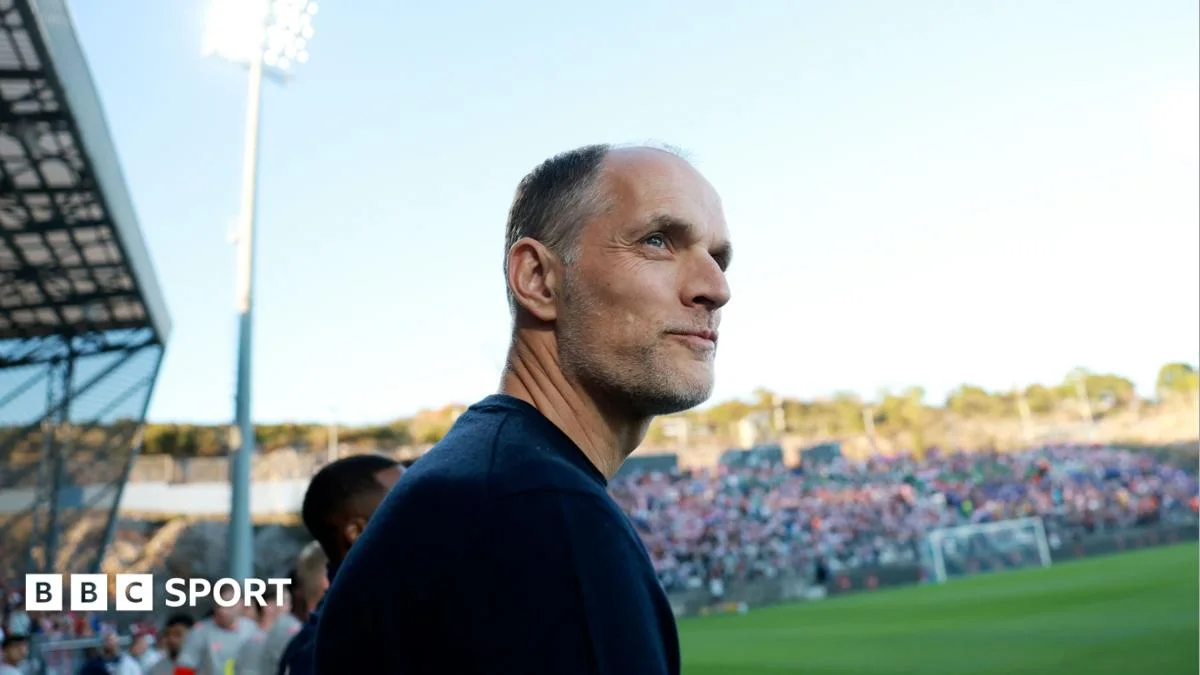
Thomas Tuchel has refined England’s tactical approach since the World Cup by committing an extra player to central build-up and increasing intensity when his side have possession. The changes come as Tuchel has won 20 of his 26 games in charge.
KEY CHANGES
- England still aim to play short from the back but now often deploy two central midfielders alongside two centre-backs in a shape that can look like 2-2 or shift into a 3-1 during build-up.
- Bournemouth’s Alex Scott has been used alongside Myles Lewis-Skelly in rotation to partner Elliott Anderson in midfield during Declan Rice’s absence; Tuchel has praised Scott’s contributions.
- When Scott or Lewis-Skelly collect the ball from the centre-backs, Anderson has frequently dropped into a back three with Marc Guehi and Ezri Konsa. That role gives Anderson time on the ball, facing forward, enabling quicker progressive passing to attackers.
- Anderson has also been allowed to occupy higher positions with defensive cover behind him, broadening his responsibilities beyond the deep-lying role he filled for much of the World Cup.
TACTICAL DETAIL
Tuchel and assistant Anthony Barry have drawn on ideas from the Premier League: short build-up to draw opponents in, then speeding play through the middle to find runners against fewer defenders. Wide triangles — each formed by a central midfielder, full-back and winger — plus a roaming Harry Kane have been central to chance creation, with constant movement intended to make opponents hard to track.
INTENSITY ON THE BALL
Tuchel highlighted a shift in England’s pressing and attacking intensity. "We've always played with high energy and a very aggressive style off the ball, to press high," he said. "Now we have added another layer. [Now, our] intensity was very high on the ball. We did a lot of high intensity runs, a lot of counter movements, and invested a lot in counter pressing." England’s adjustments have increased collective on-ball intensity as well as individual contributions such as Anderson’s counter-pressing and progressive passing.
WHY IT MATTERS
The tweaks represent refinement rather than a wholesale change to Tuchel’s blueprint. Adding an extra central link in build-up and varying Anderson’s role have been used to solve pressing problems and speed transitions, while the emphasis on on-ball intensity aims to improve chance creation through movement and quick passing.